Overview
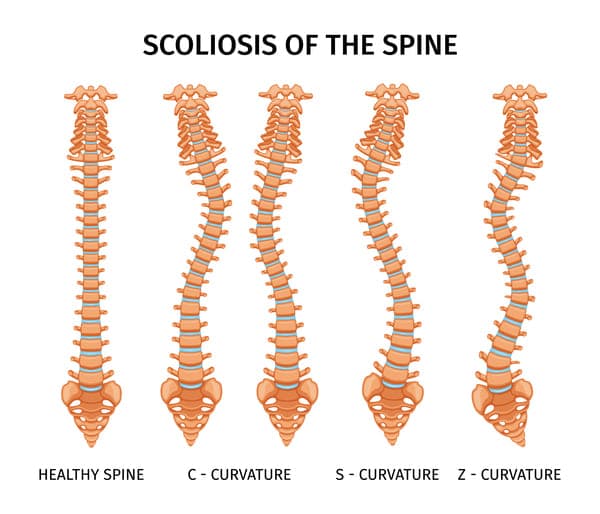
Scoliosis causes an abnormal curvature of the spine, diagnosed when spinal curvature exceeds 10 degrees. It is most commonly identified during adolescence. Mild cases may be asymptomatic, while severe presentations can produce pain, breathing difficulties and physical deformity.
Symptoms
- Uneven shoulders or hips
- Prominent shoulder blade asymmetry
- Rib cage asymmetry
- Back pain
- Breathing difficulties
Causes
- Genetic inheritance from family members
- Underlying conditions (cerebral palsy, muscular dystrophy, spinal muscular atrophy)
- Spinal tumours or infections (rare)
Diagnosis
- Physical examination
- Medical history review
- Imaging tests such as X-rays, MRI or CT scans
Treatment Options
Bracing
May prevent further curvature progression.
Physical Therapy
Strengthens paraspinal muscles and improves posture.
Surgery
Addresses severe curvature cases.
Frequently Asked Questions
- Curves under 20–25 degrees are usually observed. Bracing is considered for growing children with curves of 25–40 degrees, and surgery is discussed for curves beyond 45–50 degrees or those that progress.
- In selected growing patients, non-fusion options such as Vertebral Body Tethering (VBT) can correct the curve while preserving spinal flexibility and growth.
- Not always. Many mild curves remain stable, particularly after skeletal maturity. Regular monitoring helps identify the minority of curves that progress and need treatment.
Medically reviewed by Dr. M.D.S. Sasidharan, Clinical Lead and Senior Consultant — Spine Surgery, Iswarya Hospital, OMR, Chennai. This information is for educational purposes and is not a substitute for professional medical advice.